WHAT IS THE HARLEM MERGE: PART TWO
Shadows, Memory & Mysteries moves deeper into the more atmospheric and narrative side of the Harlem Merge visual language.
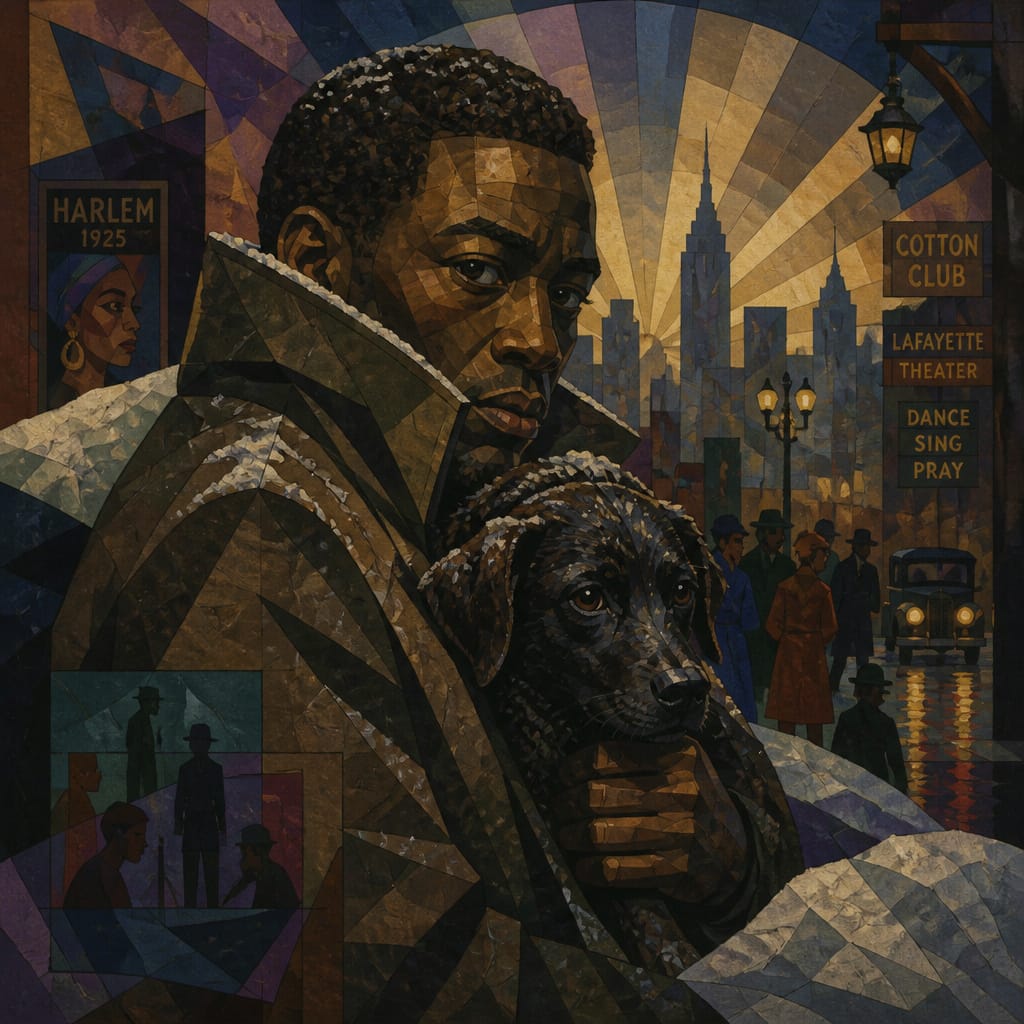
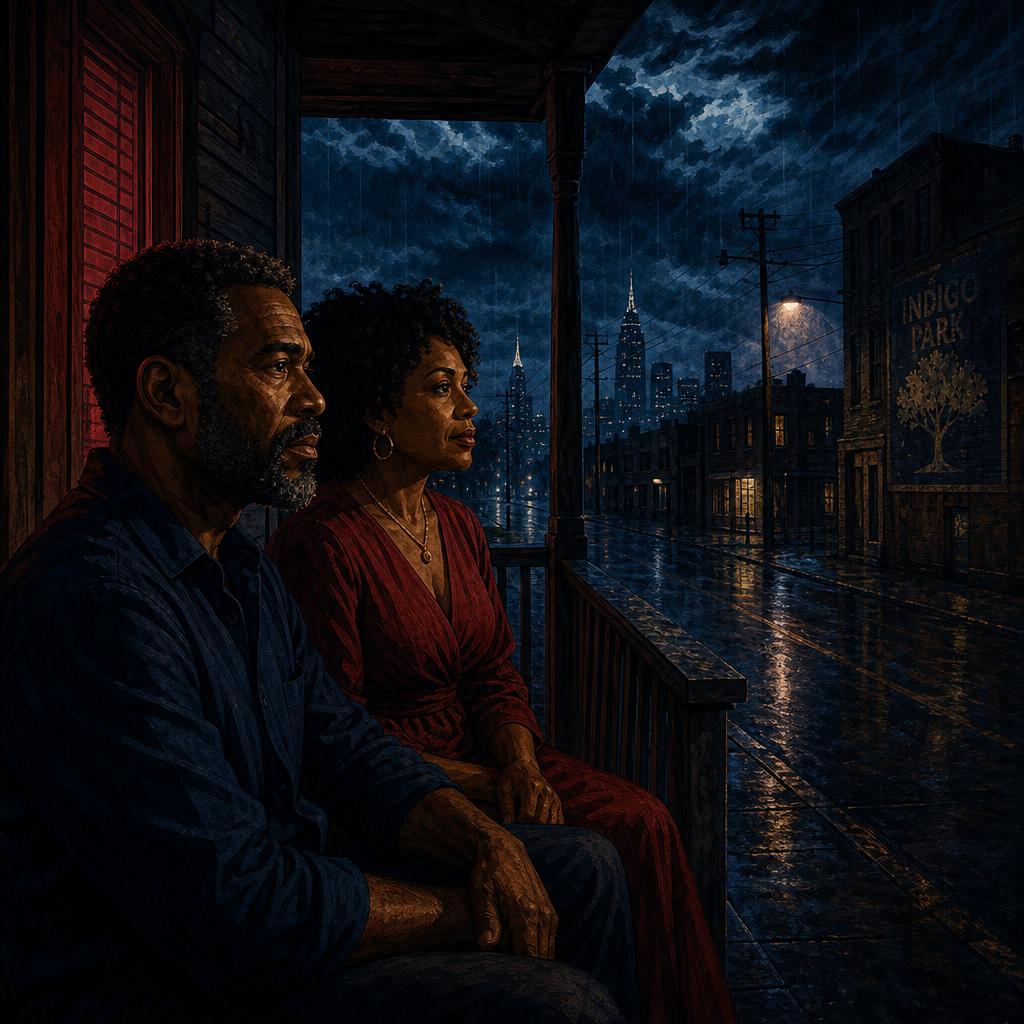
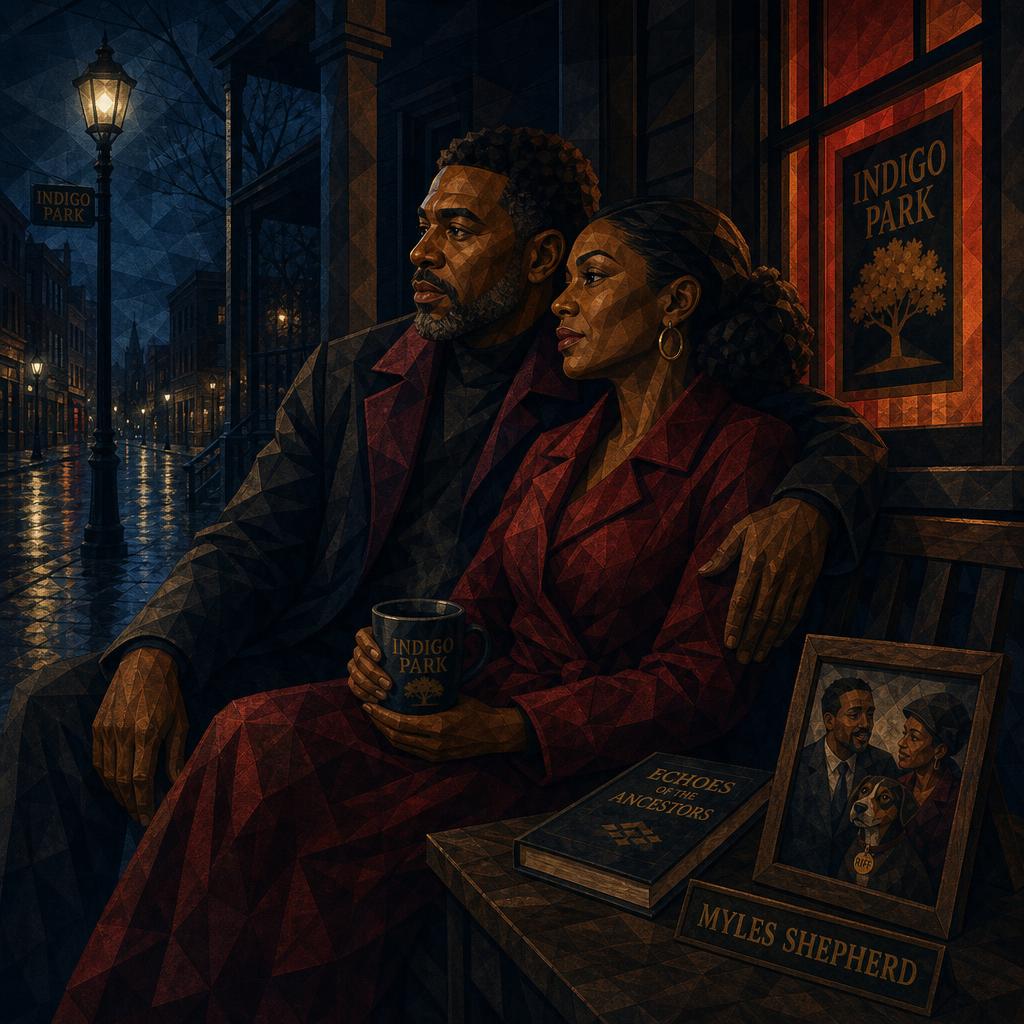
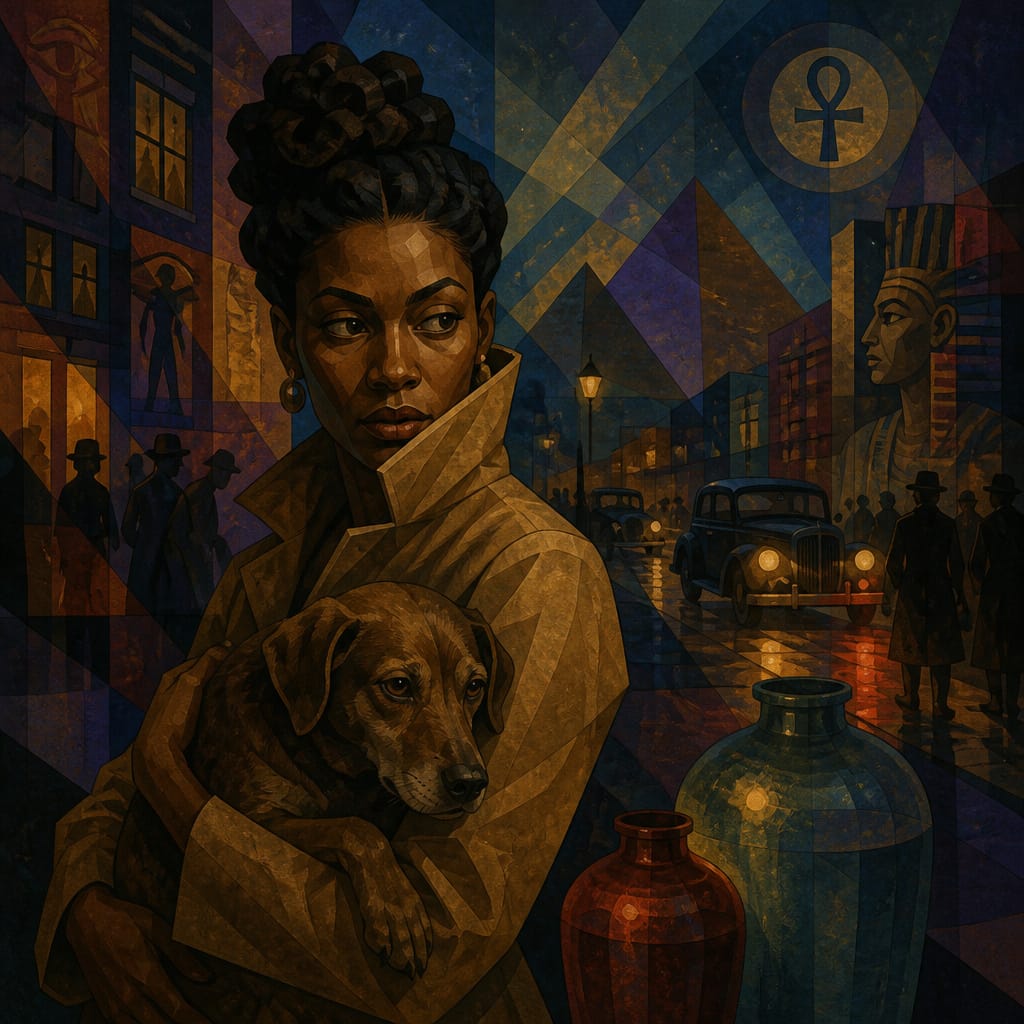
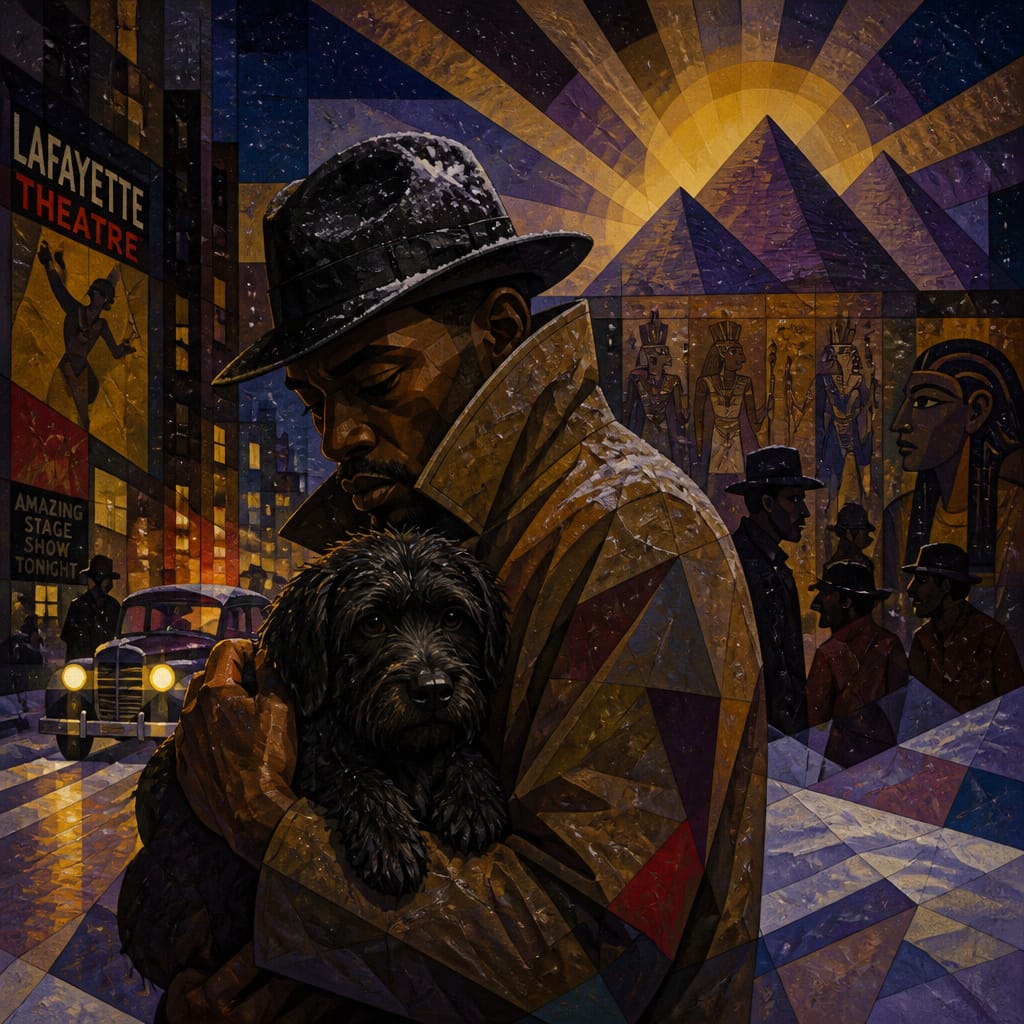
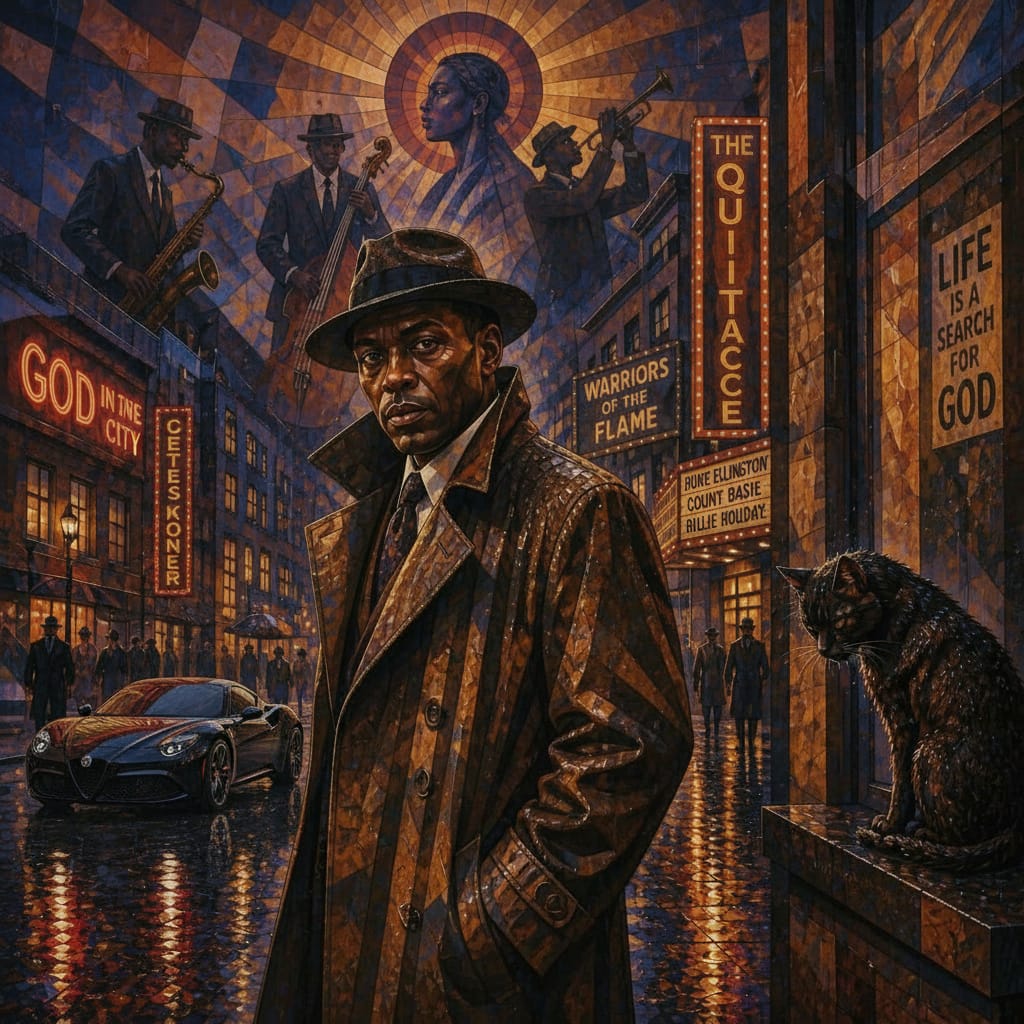
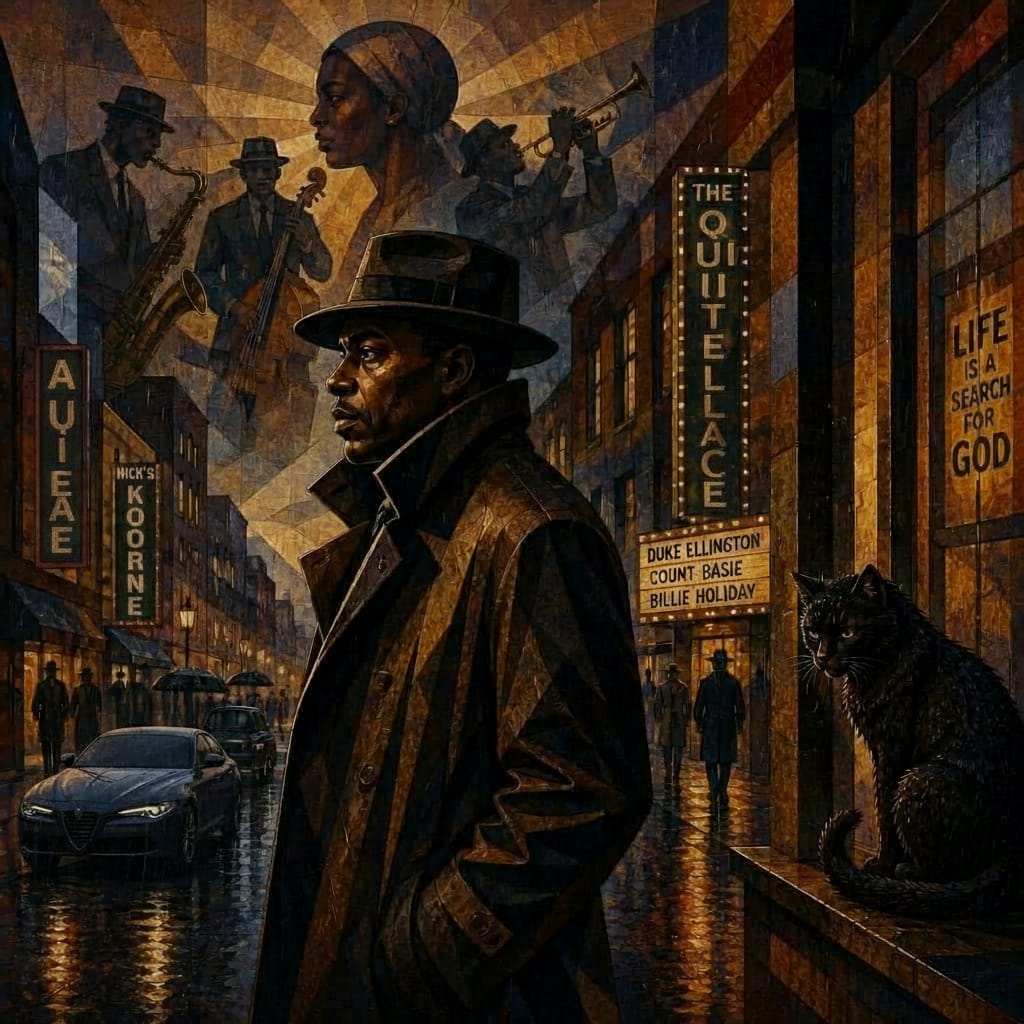
Where Part One focuses on faith, legacy, work, and community, Part Two turns toward mystery, memory, identity, spiritual searching, and the hidden stories carried through people and place. The featured image sets that tone clearly: a dark, rain-soaked city, jazz imagery, layered ancestral presence, symbolic markings, and central figures moving through a world that feels both contemporary and haunted by history.
The visual language continues to draw from the geometric abstraction, radiating forms, and symbolic structure associated with Aaron Douglas, together with the human-centered storytelling and dramatic narrative composition associated with Jacob Lawrence.
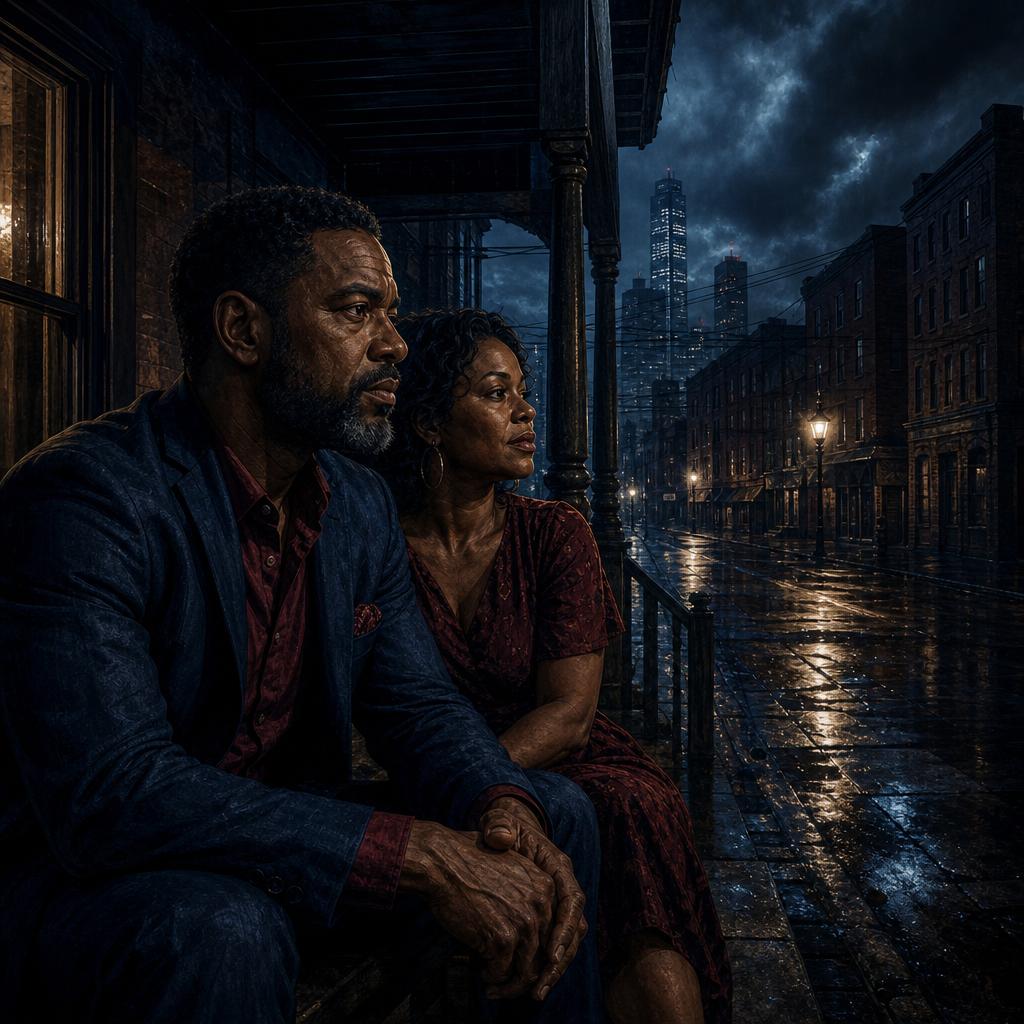
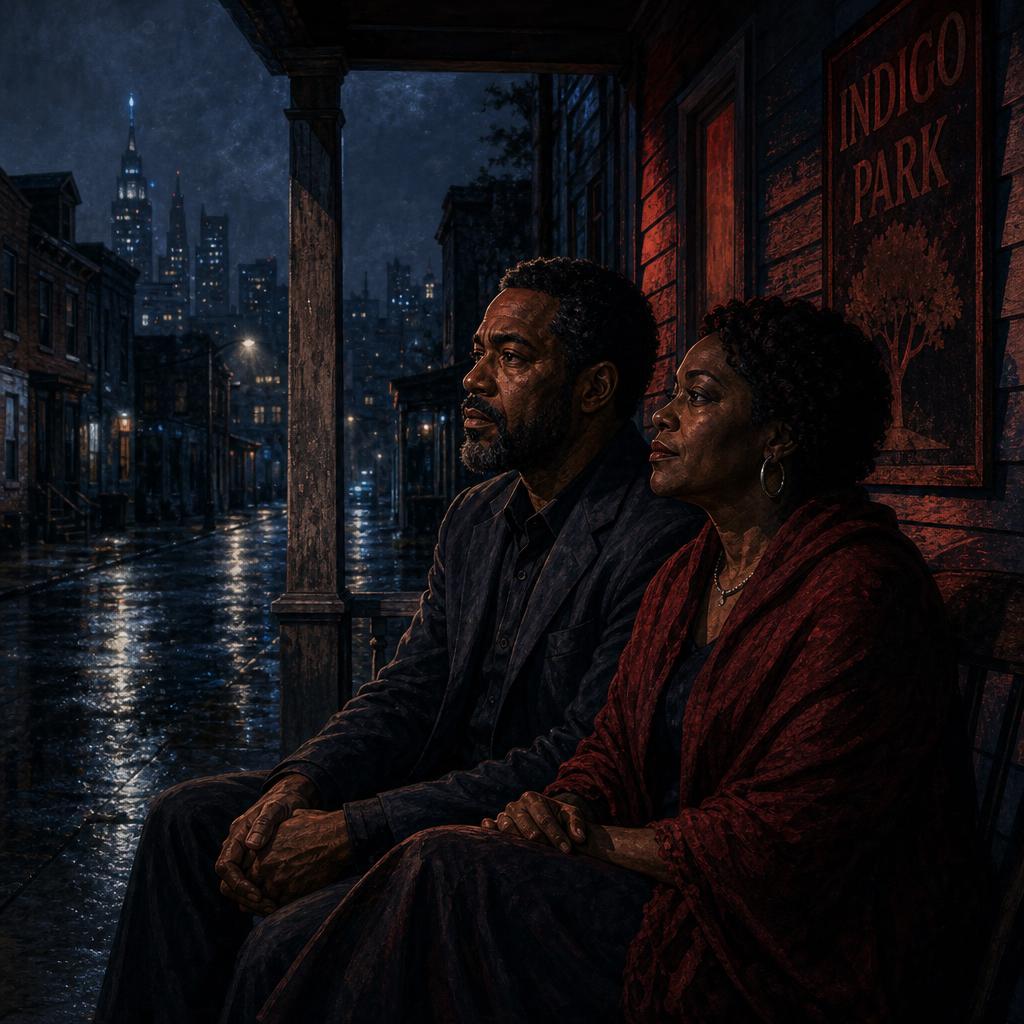
In Part Two, however, those influences are pushed into a more cinematic direction through noir lighting, deep shadows, reflective streets, jazz clubs, winter scenes, historical references, and imagined settings such as Indigo Park.
Many of the works feel as though they capture a moment in the middle of a larger story. A man stands beneath the weight of the past. A woman moves through a city filled with cultural memory. A child waits in falling snow. Musicians, ancestors, spiritual symbols, and urban architecture appear almost like fragments of memory layered across time. The viewer is invited not only to look at the image, but to ask what happened before it and what may happen next.
At the center of Shadows, Memory & Mysteries is the idea that places remember. Families remember. Communities remember. Sometimes those memories appear as inspiration, sometimes as unanswered questions, and sometimes as shadows that continue to shape the present.